Wednesday, April 21, 2010

Graphically Competitive

Industry experts are saying Apple’s new I-Pad is a revolutionary development in visual communication, able to deliver page and video formats wirelessly and in color to handheld devices not much bigger than a magazine.

At this point, who knows if the I-Pad will change anything beyond its early market hype? Vertical applications for this new device are still a ways off, especially for construction managers who are still struggling to keep pace with all the other technical changes now flooding a very competitive industry.

In practice, some construction companies are only just now taking advantage of simple email and page publishing programs, including texting messages and photos from the field to wirelessly file daily reports on project activity. However, except for a handful of the more technically advanced companies, most of the industry remains reluctant to place graphical information systems of this kind at the center of their management methods. That takes time, money, and talent.

Technical advantages
At the same time, most construction organizations know from experience that competition for projects is going to get even more intense as the economy finally comes out of the starting gate.
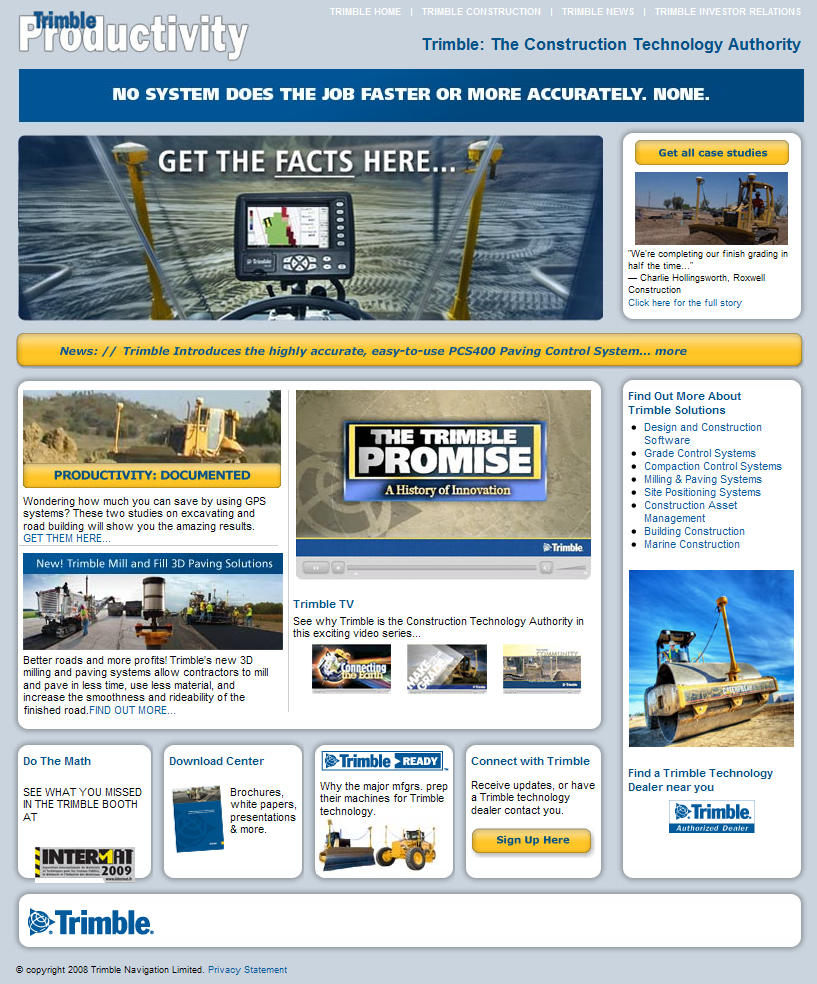
That level of intense competition will mean finding ways to take advantage of tools and ideas that give the winners a competitive edge in a rapidly changing economic environment.

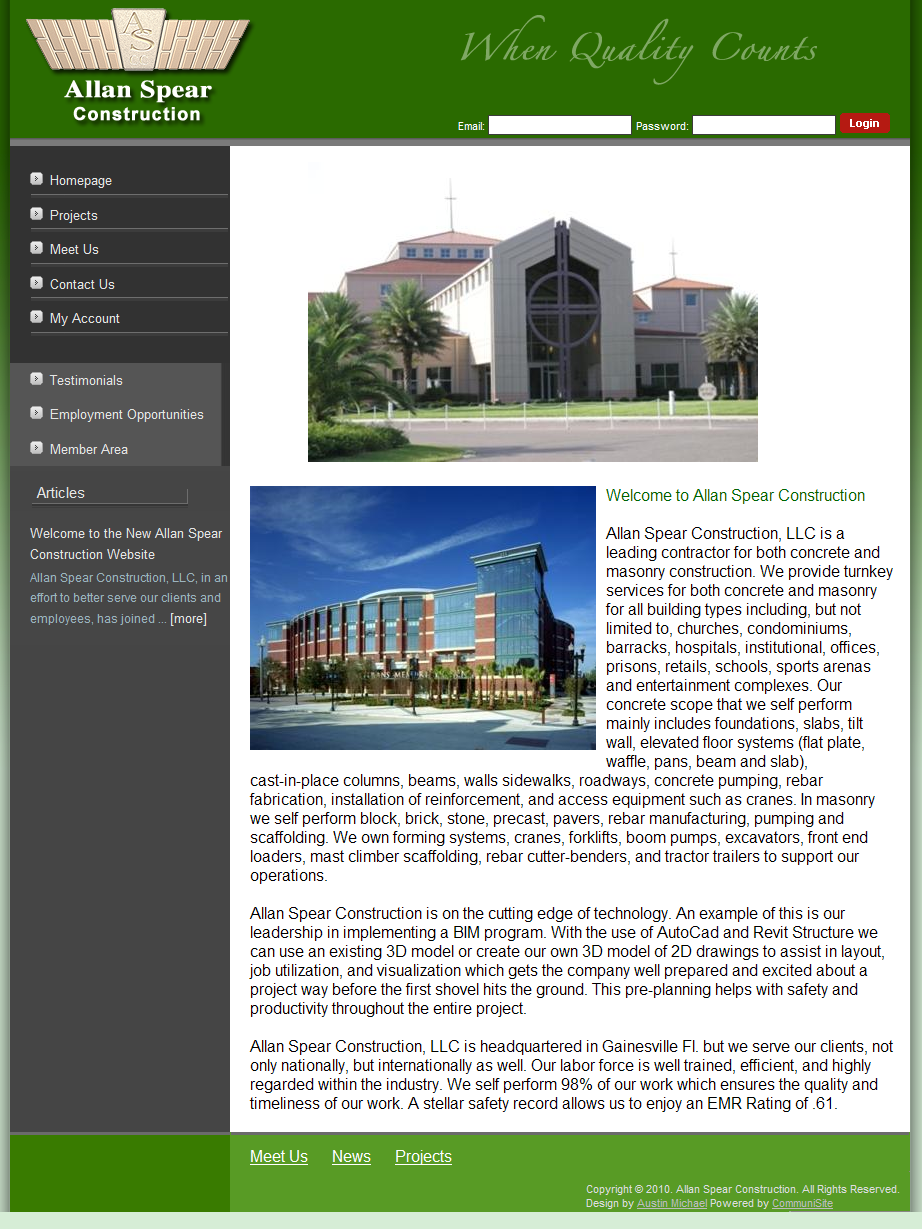
The Internet and websites like Allan Spear Construction are obvious examples. Just a few years ago, the idea of investing in a web page was only a passing interest for most people in construction. Few saw the potential of the web to graphically clarify their mission, visually promote a strong company image, and illustrate unique proprietary processes that are often buried and forgotten in project proposals.

While most now accept that some online presence is a necessary business expense, the more innovative industry leaders have pushed their websites to communicate new management approaches and systems based on track records of real world experience. This means they’ve found ways to add depth to their market perception, increasing their lead over the more conventional construction companies even further.

In fact, the challenge of seeing and adapting to change makes this a pretty exciting time to be an innovative construction contractor. Constant and continuous change creates all kinds of opportunities for quick thinkers. It triggers shifts in the marketplace and seemingly insignificant openings that technically aggressive people and companies will be able to squeeze into in order to beat out the slower, late adapters. When that happens, the powers of these technical innovations will expand market expectations, setting the bar a little higher for everyone trying to maintain a competitive organization.

Visually Augmented
In today’s fast paced world of construction, it’s not about drafting or reading construction drawings any more. New graphical devices are becoming central to visual communication strategies that are far more powerful than drawings and words alone. These are descriptive images that open doors to an ongoing conversation where interactions and details evolve (or dissolve) over time.
Important is that technology is not central to this exchange of information. It simply augments the experience and knowledge available to a generation that has never feared its implementation. What we find are construction managers who have either grown up with these tools, or had the imagination to recognize the potential of construction models, animated images, and graphical networks and how they can assist them in delivering a higher level of services than were once possible.

Also important is that these communication technologies are embedded in a mindset where these same construction managers are able to step away from their power and apply a personal, more face to face approach whenever necessary. These are professionals comfortable with visual explanations and able to use it to their advantage whenever it’s necessary. In other words, what may be complicated or difficult to others is no more than a simple set of tools that help them do their work more efficiently. Most interesting is that they join a network of similar thinkers across the broader project development community -- our clients.

What we see as a result is a technically augmented group of managers. These are primarily men and women who have not only adapted these tools to their social and professional lives, but internalized their potential as part of their innate competitive motivations. As such, they’re secure in using these strengths to market their services whenever it works to their advantage.

Layers of visual explanations
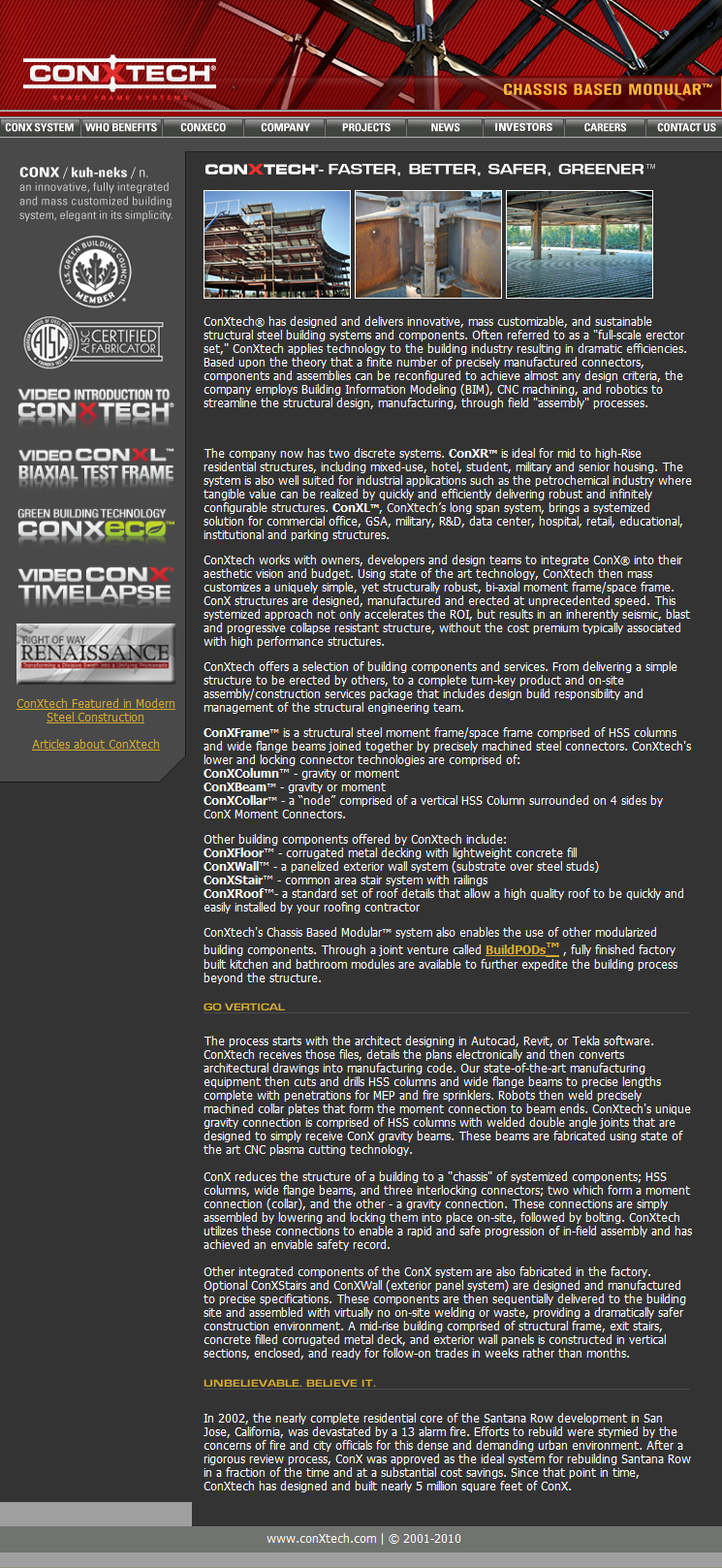
Technical augmentation like this is central to real world competition. Consider a truly assertive website like the one used by ConXtech in Hayward CA. This site becomes an information delivery system, based on a layered visual presentation as an approach to both a revolutionary product and an innovative construction method.

On this site, graphical information mixes with video, animation, and interactive content that changes according to client interest, adjusting levels of supportive information, posted continually to the web for immediate review.

When an interactive presentation like this is seen next to a company showing a template of 20 or 30 canned Power Point slides, with a lot of the same old industry jargon, written tediously as text-based bullet points, it becomes obvious that old school thinking is struggling to remain relevant in a modern age. Dated companies like these are often far behind the curve and less able to keep pace and collaborate with a more technically proficient project team.

After all, it’s the construction industry’s development clients that are the first adapters of almost any system that improves investment potential. Otherwise they wouldn’t be in the project production business – at least not for long.

Turning toward hypergraphic communications
When fully incorporated into construction management, these graphical tools provide advantages that are fast becoming part of both social and professional interactions. These are tools that may seem disruptive to outmoded schools of thought, but are simply natural extensions of expression to those that are able to put these technologies to work.

Most interesting is that each of the tools is open-sourced, user defined, and free from the constant need for upgrades that are required by expensive commercial software. Like any tool or piece of equipment, all they need to be effective is a little training, a bit of practice, and periodic maintenance.
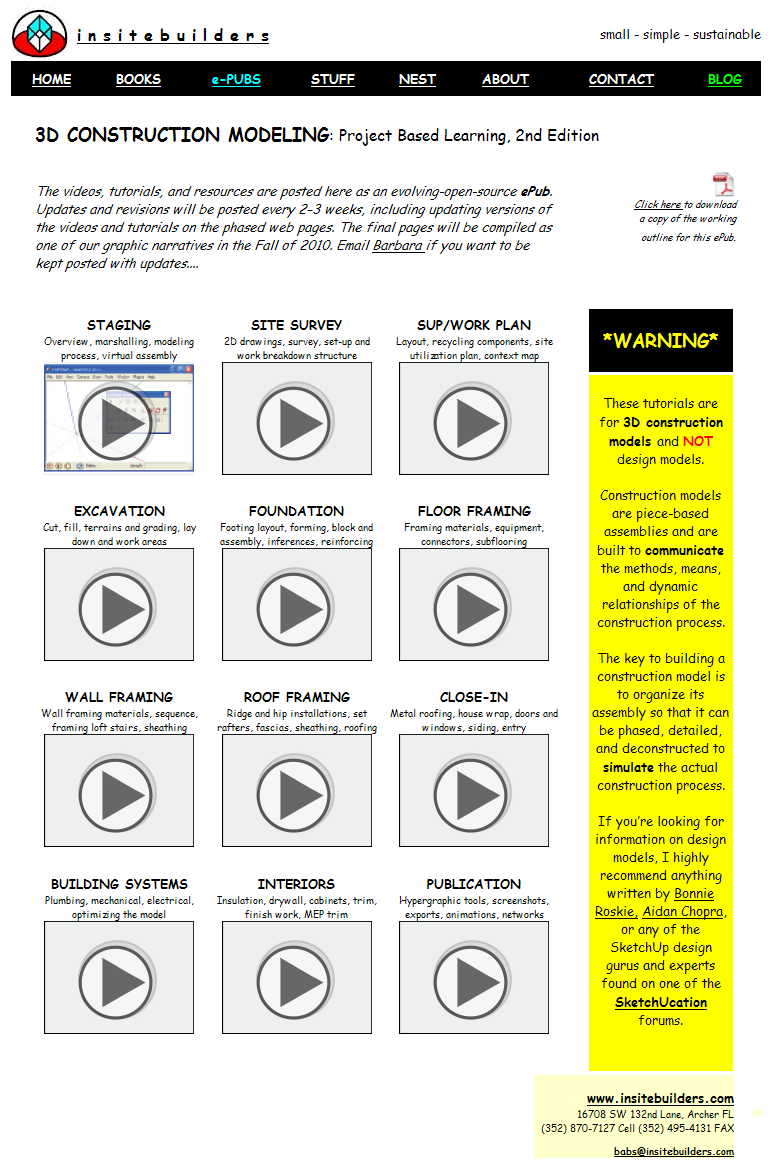
To demonstrate the potential of a variety of hypergraphic tools, we’ve begun posting a series of tips and tutorials on the ePub link of the Insitebuilders website. The lessons linked to these pages are a work in progress and change daily, but you can follow along as we try different formats and software, demonstrating their potential for hypergraphic construction communication.

Our goal is to graphically empower constructors so they can begin to communicate their ideas throughout the project development process.

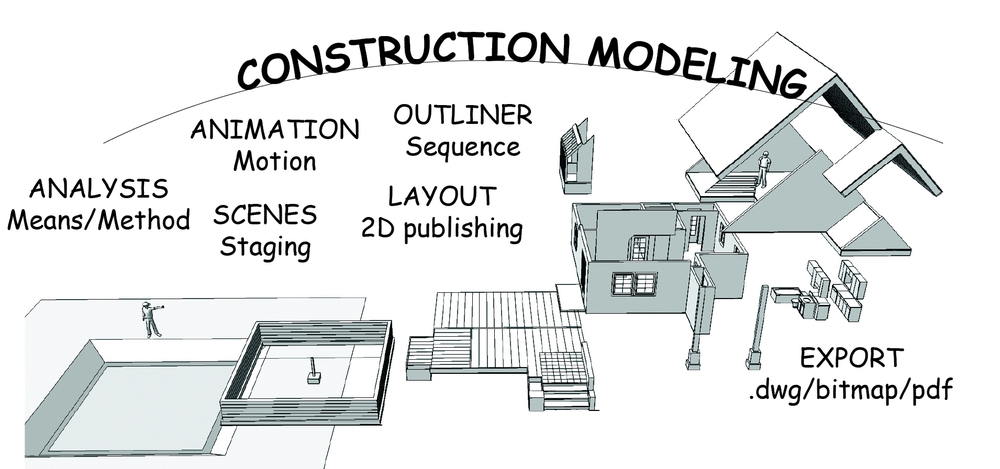
As you’ll see, visual explanations in construction are based on the ability to quickly build simple 3D models similar to those found in our books. 3D construction models visually explain the means and methods of a particular process because they can be sequenced, annotated, and published to the web.

It’s the web, along with the I-Pad, that makes the potential of Apple’s new invention most worthy of note for the construction industry.

Thursday, February 11, 2010

Hypergraphic Construction Communication

Democratized Communications
The idea that free and open source software might actually democratize construction communications could actually be a driving force behind the ongoing drive to upgrade CAD programs.  Just to survive, software developers must constantly add layers of complexity to their products simply to create a marketable need for a competitive upgrade.

Of course, the percentages of system managers able to use or find consultants who can work with each newly marketed upgrade is limited at best.  And the search for compatible collaborators only adds to the market perception that not owning the most actively promoted new software, makes it somehow difficult for a company to do what was once a straightforward matter of getting a building built. 

The Fatal Flaw of CAD
For an example, just look at the “success” of the so-called BIM model.  While most are still trying to figure it out, the market’s perception is clear:  good parametric models self-generate error free 2D drawings, collaborative menu-selections seamlessly link design and construction, and the implied promise of faster and cheaper real-world production.

These features are not sold to individual practitioners, but to a broader industry of media professionals, conference organizers, and developers hungry for news of more effective communications between design and construction professionals.

Of course, the mounting complexity of these programs is their fatal flaw.  After all, the plotted output of even a high end CAD program is still a printed set of two-dimensional documents.  Everything else is what Edward Tuft calls “fluff.”  And every experienced builder and designer knows a set of plans and specs is only a fraction of what it takes to actually coordinate the construction of a building. 


Social Model of Communications
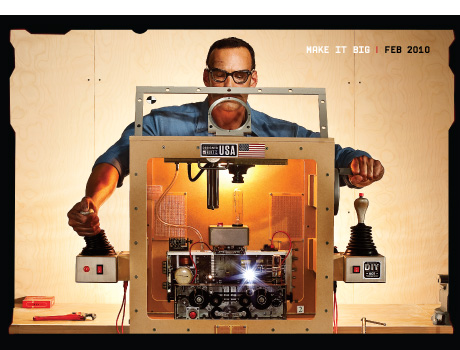
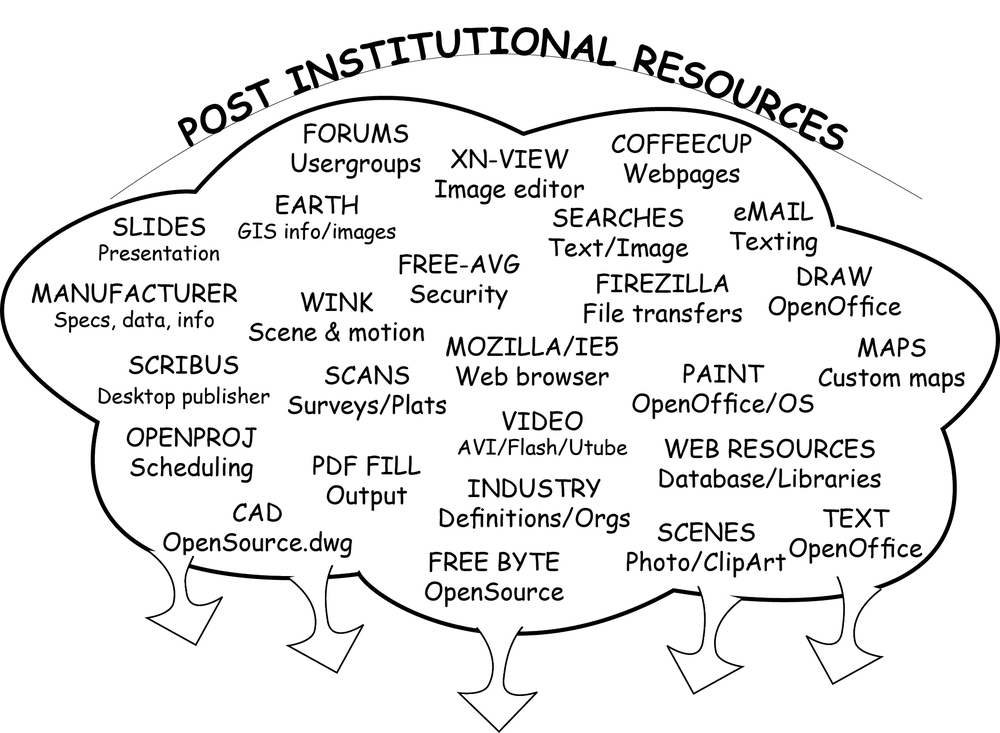
In Wired Magazine’s February cover story, Chris Anderson writes about a post-institutional model of an open supply chain where designers and builders gain almost unlimited access to a vast social network of information, products, and willing collaborators on the Internet. 

Anderson points out that in this post-institutional social model, the web rains a variety of resources that were impossible to find just a few years ago.  The result is a down pour of new, deinstitutionalized programs that bring transformative change “ripped from the sole domain of companies…and handed over to regular folks.” 

For our industry, this includes a variety of software programs that work easily together across a range of real-world applications.  Ironically, these programs are not difficult to find and put together, but remain largely unknown primarily because no one is promoting them as a single software platform.  When something is free, there is nothing to “sell.” 
Open Source, User Driven
Post-institutional software also means upgrades are driven directly by the users of the product and not by a manipulated market of need.  This mean the people using the software shape and share the direction of its development, sometimes in the form of faster or more efficient code, other times as plug-ins or add-ons written for some practical purpose, customized for a specific user group. 

SketchUp is a good example of this kind of social development.  Not because of the guiding hand of Google Inc, but precisely because of it’s almost complete neglect.  Instead, Google leaves SketchUp open to a number of highly proficient, completely independent, Ruby programmers who seem to be able to make the software do anything an industry of users needs to put the program into practice. 

And when plug-ins and fixes are not possible, an active user forum publicly pressures a relative handful of Google employees to correct problems and make the changes.  Add to this community of interest, master modelers and use-group coordinators like those found at http://SketchUcation.com and one sees the essence of what Anderson means by a post-institutional social model on the web.

Hypergraphic construction communications
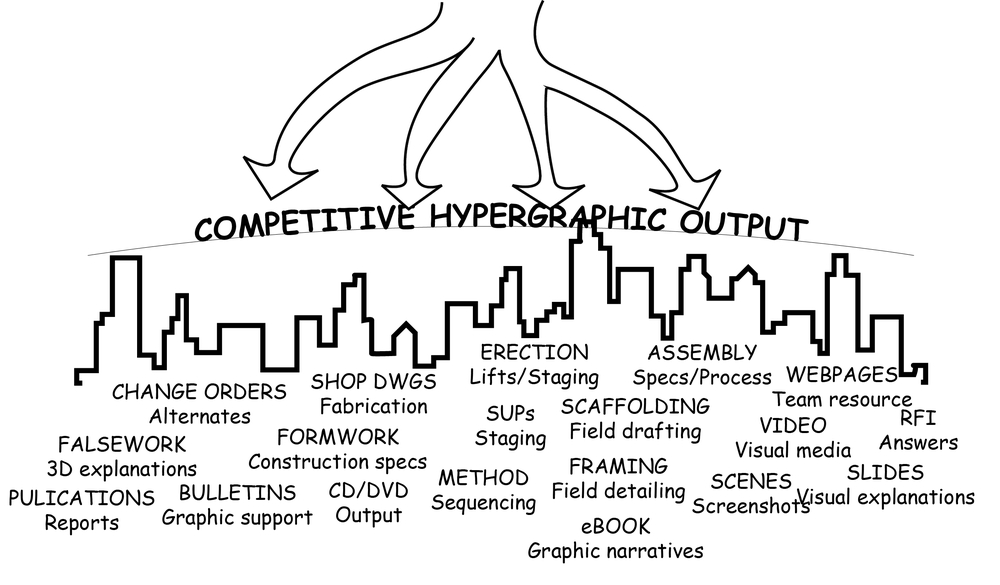
Software like SketchUp sets the stage for the kind of hypergraphic communications found in this social model.  Hypergraphics is a synthesis of text and visual media, part of a critical method of thinking developed in the 1950s.  The idea is that communication is multiform, intended to transfer a body of information in a variety of media, sometimes working independently toward the same intent or description, but just as easily varied and seemingly disfunctional.
The key to success in this post-institutional standard is to know what tools to collect from the web and how best to integrate their applications in daily practice.  Much of this integration has already begun.  Email, web research, and even CAD would not exist without the Internet and our current dependence on these new digital forms of communications. 

In the same way, cameras are routinely found on jobsites, with pictures and video readily attached to communications and clarifications.  Digital scans can now be posted or emailed directly from high speed copiers, including high resolution settings that capture every detail of a construction.  And drawings, either sketched by hand on a piece of drywall or drafted on a machine, remain at the core of construction communications, more often than not, copied into the project records as part of a database of archived construction information. 

Capturing Sequence, Scene, and Motion
One thing is clear, quick and simple construction modeling is at the heart of the tools necessary to communicate effectively in an open-source post-institutional environment.  When 3D construction models are quickly generated in the field, their output facilitates three-dimensional explanations of what has all too often been found buried in layers of two-dimensional scrawl on wrinkled sheets of rain stained paper.  
Instead, images extracted from a construction model set the stage for capturing the sequence, scenes, and motions of the construction industry.  Sequence is assembly and action.  Scenes are events and milestones.  And motion displays both means and method over a given time.

What we demonstrate in all of our books is the fact that when these tools work together, they join a hypergraphic narrative as a pattern of multi-media messages.  These are cross platform approaches using quick and simple, good enough programs, that serve to communicate exactly the kind of real-time information necessary to get the building built.


A Small Home of Your Own: Plan Permit Pay in 3D

Friday, January 1, 2010

CADification of Communications

Not long ago, the intent of a working drawing was to graphically diagram the construction of a building. The general idea was to explain the work necessary to build a building according to the needs of an owner.


Designers drew drawings as a kind of two-dimensional shorthand to both interpret and convey the requirements for a building. Drafting those drawings and typing specifications was not easy, which meant only the most essential information was produced – just enough to communicate the construction and get the building built as quickly and efficiently as possible.


Designers were not paid to draft. They were paid to help build the building.


The fog of fee-based data


Today, in a computerized three-dimensional world, it stands to reason that a set of construction drawings has to include basic floor plans, elevations, sections, and details. Given the automated capabilities of CAD software, it also makes some sense to pump out site plans, schedules, structural, and MEP drawings simply because they can easily add bulk to a set of contract documents.


For more complex buildings, CAD operators can almost mindlessly cut and paste any number of sheets of standard details and schedules, along with cross-referenced layers of repetitive overlays, civil engineering drawings, and interior elevations.


In fact, if we believe the hype, it’s easy to imagine that entire sets of construction drawings can be parametrically extracted from a “simple” BIM model.


At the same time, entry level assistants can use form-based software with lightening fast laser printers to quickly generate stacks of specifications and other text based publications, adding several pounds to a neatly bound, crisp looking set of fee-based data.


Pound for pound, the resulting product looks and feels like it has a lot of value. It must be a good set of documents. There’s so much of it.


What are we doing?


Given that almost no one benefits from the weight of a set of construction documents, except a smart construction attorney, it only makes sense to step back and rethink what exactly we’re trying to do with this technology.


Program specific CAD-based drafting is like the proverbial I-got-a-hammer-and-everything-is-a-nail dilemma, even when no one, not the designers, builders, or owners see anything as simple as a nail as the primary purpose of the construction document.


There’s no doubt we need thse drawings, but paying tens of thousands of dollars to train and chase software upgrades is bordering on an obsession in many design offices, when all that is required is to communicate the information necessary to simply get the building built.


Worse yet, this creeping CADification is now beginning to impact construction management. An invasion that cuts to the core of the spiraling scope of construction services, leaving constructors to battle boldly in a computer generated war of technical upgrades that no one is going to win (except of course the attorneys…)


A hypergraphic communication toolkit


Since we all know the problem is a failure to communicate, why not use the array of simple tools now available on the web. Most of which are intuitive, easy to use, and absolutely free.


Obvious tools include programs like this blog, email, and web pages, we now use these kinds of tools everyday. Not so obvious are uncomplicated and transparent programs like:


Google SketchUp: a simple 3D modeler that almost anyone can use to build just about anything after 15 minutes of practice.


Scribus: one of the simplest desktop publishing programs one can imagine, combines drawing tools with text, photos, and images.


OpenOffice: open source software including a word processor, slide show maker, spreadsheet, and both paint and draw programs.


OpenProj: a simple and powerful schedule and project manager, using visual formats to plan and coordinate a project quickly and effectively.


WINK: takes screenshots, records video, and captures your voice to deliver animated instructions, tutorials, and real-time information from your desktop.


XnView: an image organization and editing tool that can crop and refine photos and drawings for the web, printed materials, and slide presentations.


Coffee Cup: a webpage editor to make your own project-based websites with access to free server space to maintain a place on the Internet that you can control.


Firezilla: a basic file management utility to drag and drop information on and off the internet and maintain your project postings.


Free-AVG: essential for web/email security, even monitors visited websites attempting unauthorized access to your computer.


PDF Fill/PDF writer: a collection of tools to create, modify, open and work with PDF files printed from any other program.


What’s amazing about these tools is that all of the programs are absolutely FREE. That’s what makes them so universally powerful and at the same time fundamentally difficult to bring into actual practice. No one is selling them and there is no hype to hide behind.


Instead, they’re quick to learn, easy to use, and only rarely upgraded by a public forum of users. They automate nothing, do not obfuscate with menu selections or dialog boxes and leave content in the hands of the provider.


They’re simply “good enough” to deliver your message, explain the construction, and get the building built.


These tools are like an assortment of electronically animated colored pencils. Each has a separate purpose and a specific communicative power. All they require is an understanding of what it is that needs to be explained and the confidence to step back and rethink what information is absolutely necessary to get the job done.


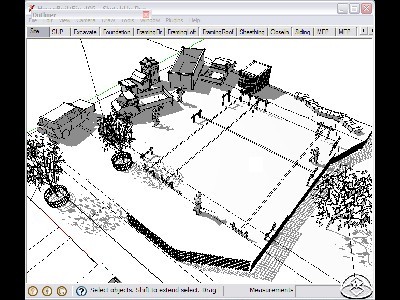
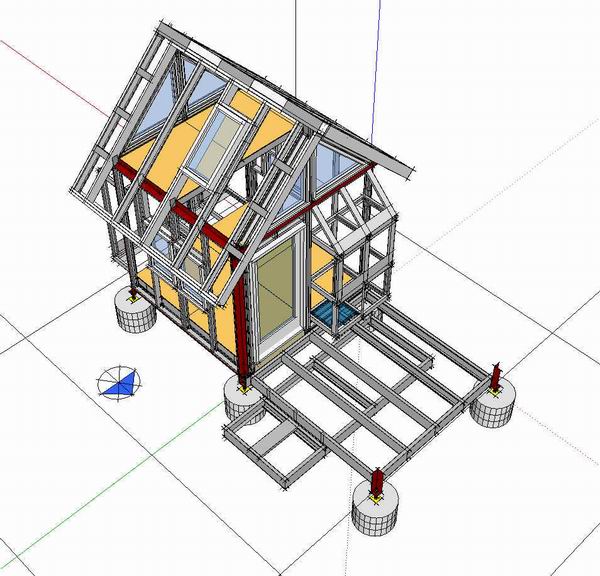
Click to Download this SketchUp Model of our Hypergraphic NEST Trainer


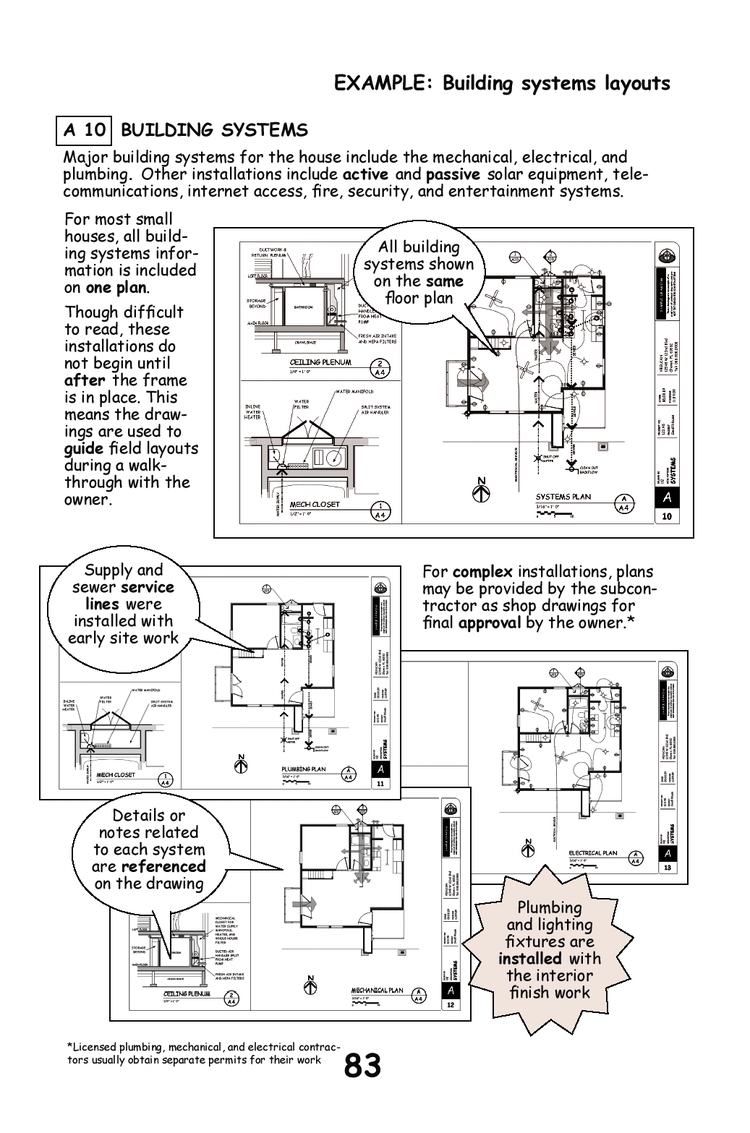
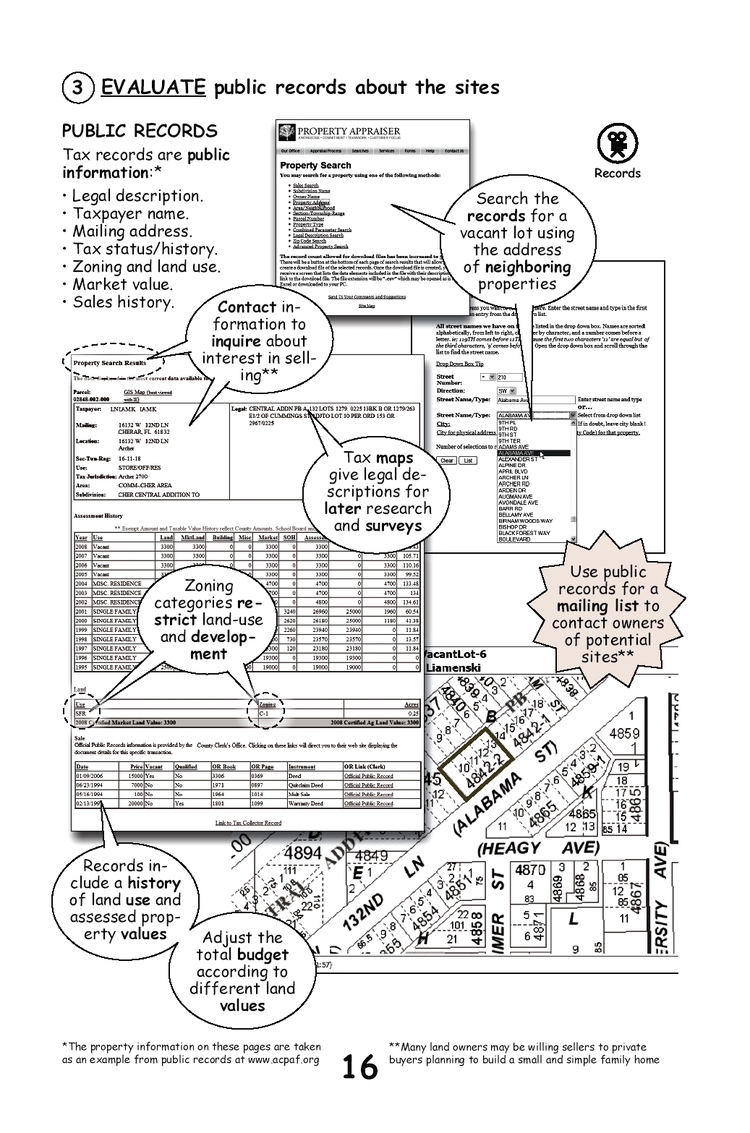
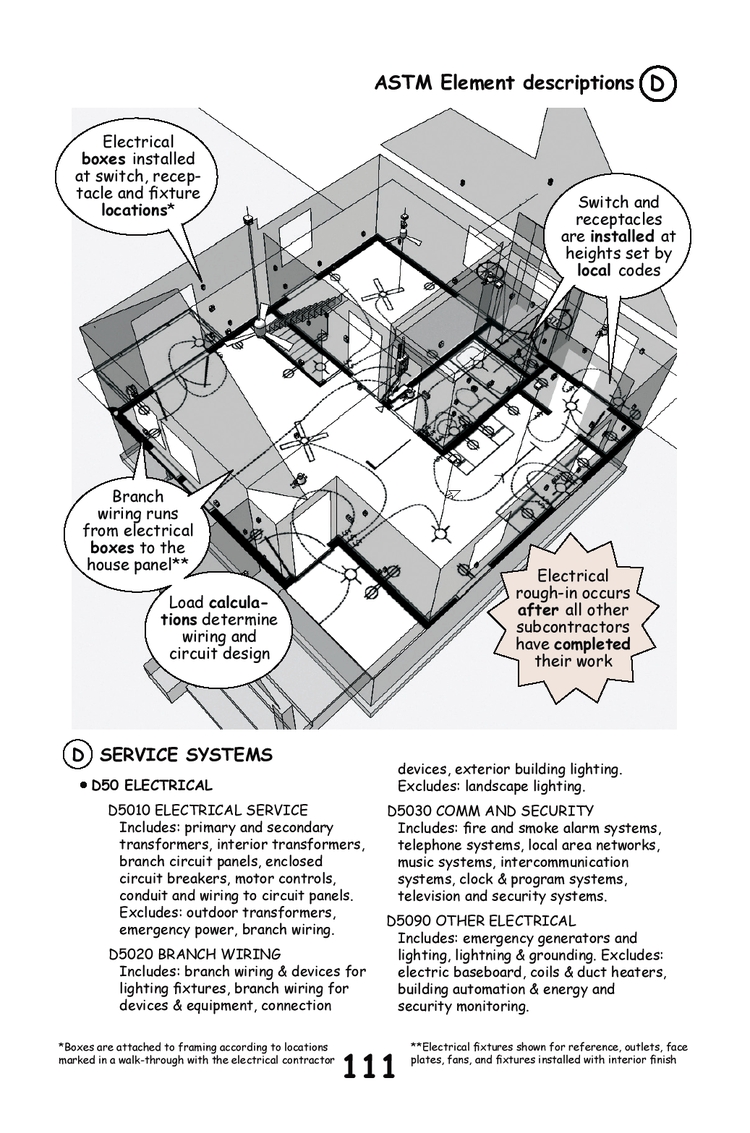
*Images are from our new book, A House of Your Own: Plan Permit Pay in 3D, see www-insitebuilders.com

Sunday, November 22, 2009

Construction Communication and The Cloud

The response to the article “Good Enuf Construction Communications” was generally mixed, mostly from senior project managers dealing with the day to day challenges of the real world.
“Sorry...but buildings are still built face to face...not on a computer or IPod, or via text messages...I just recently fired one of my new hires because of the exact reason you are indicating it is a good thing......” CK
He's right, and I totally agree -- since the conclusion at the bottom of the article was pretty much exactly the same. He missed the point, but the miss of course was not the fault of a reader, but completely the fault of page headers and the linear format of a written blog.

It makes one think about how little time a professional manager really has to read to the bottom of any document. No doubt why specs, minutes, and memorandums are skimmed and generally go unread. And how much time is there to communicate or even mentor a new hire face-to-face? Little to none, that's for certain

Changing Faces of Technology
Another comment from an experienced project manager in France shows the same communications challenge.
“From my point of view, you cannot reduce language to a few words … you take more time to describe some particular stuff because you don't know the right word to use : I hear it everyday in the construction field : Youngsters don't know the right word, so...they invent (new) ones...” OT
He's again right, the real challenge for construction managers is to interact across a communication gap, one that combines an instinct for multitasking, limited time and attention spans, and access to the kind of technology, now fairly common and accessible to most young professionals.

Take a look at a typical wireless home. Note especially how the same home-based technology creeps into the tools of construction management.


This StudioDELL video shows the kind of home that is increasingly becoming an information and entertainment center. This is a place where wireless access blends with daily tasks to give a new generation of managers the almost natural ability to communicate in completely different ways. Ways that do not easily translate to every busy construction professional.

Faces in a Cloud Communications
What we’re seeing is a growing cloud of information. And it’s not only found in construction. For example, listening to a doctor’s advice has changed radically. Not only does a doctor have less time, s/he is monitored by open critiques, online reviews, and lay and professional opinions posted to hundreds of possible websites.

And few still listen to any professional advice without not only “googling” the medical information, but the doctor’s name, professional background and activities, as well as any insights into their personal lives that are floating in the cloud of information available wirelessly from the front seat of a pick-up truck.


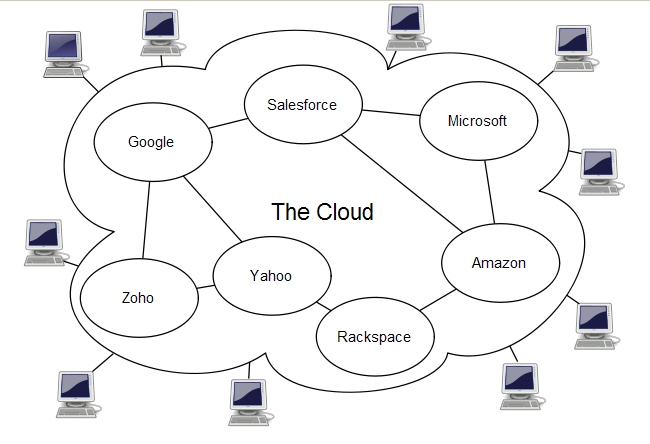
(Source Wikimedia Commons, Sam Johnston, See also: http://creativecommons.org/)
.
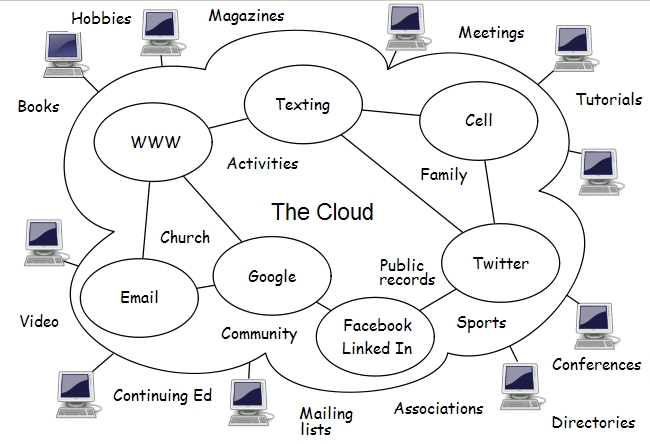
The Cloud of course, is the internet-based use of computer technology. It’s a shift in information technology in which Wikepedia’s authors see that “details are abstracted from the users who no longer need knowledge of, expertise in, or control over the technology infrastructure." IOW, the internet brings a transparency to both information and communications. The old time face-to-face now includes hundreds if not thousands of faces-to-faces.


When the full potential of this cloud is understood, anyone on or off the project team can find detailed project information mixed together with family, hobbies, past project experience, and alternate opinions about almost any construction materials or methods, all blended to underscore or contradict an authoritative technical response. There is no control point or obligatory power position (OPP) any more. Information transfers seamlessly from the cloud.

Changing Faces of CM
And as most already know, the faces are changing as quickly as the technology. Take a look at these new-gen professionals from Construction Management Association of America (CMAA) postings to U-Tube.


One can see in these fresh faces the same commitment to the construction industry we all share. Only they've learned to operate and expand their communications skills using this cloud of information, mostly because they’ve been educated and are succeeding because it has always been there (for them).

BTW, CMAA is also on Facebook, which means all the construction management "fans" or “friends” of their page also have a page on Facebook. Check the sidebar to see the faces of professionals networking and communicating in this newly forming cloud. Some even Twitter along with one of the CMAA VP’s John McKeon, while he’s making his daily rounds.

The New Face to Face
The challenge, of course, is much broader than communications within any one country, with both team members and competition spreading globally in an economy that is in itself rapidly restructuring. Take a look at this trick from Tecton.


IMHO, the genius of these emerging technical innovations and this growing cloud of information will not rest with its technical inventors and programmers. The real strength of the new face-to-face will rest with the men and women who are able to see beyond the traditional obligatory power points. These are the PMs, CMs, ORs, regulators, investors, and citizens who are able to access the underlying and once hidden motivations we’ve all learned too well to mask behind the old face-to-face.

As I see it, the new face-to-face emerging from simple good-enuf interactions, adds a whole new meaning to the word “communications.”
.

Sunday, October 4, 2009

Good Enuf Construction Communications

The Associated Press reported recently that students are writing papers and answering essay questions on their test in what Nathan Snow calls IM/Text Speak – a kind of short hand that gives users the ability to maintain rapid, almost continuous intercommunications.


While some educators see this as further evidence of the deterioration of writing skills, many point to the fact that students are actually writing far more than they did just a few years ago and learning to build strong communication skills. In fact, the entire context of social networking is stretching the boundaries of relationships between students, students and teachers, teachers and teachers, and innovative young professionals.


Cell to cell is the new face to face

Wired Magazine notes in “a study by comScore MediaMetrix, more than 250 million people use instant messaging regularly. And IDC estimates that more than 7 billion instant messages are sent every day.” To put that into perspective, the population of the US is a little over 300 million.


The spread of computer mediated communications is obviously growing exponentially around the world. Even more interesting is the introduction of a miniaturized 3D environment by companies like “There.” They’ve invented a way to let people communicate with each other inside an animated three dimensional space – on their cell phones.


One can easily imagine these three-dimensional environments growing into larger virtual worlds, stretching the potential of cell to cell communications, suggesting an even deeper value for the communications challenges facing the construction industry.


Communication tangled by technology

At the same time, what is particularly interesting is how the real communications potential of simple cell to cell conversations gets tangled up in the marketing mumble jumble of constant upgrades and gigabyte computers.


For example, Edward Tufte writes about what he calls the poverty of content in PowerPoint presentations in his book Beautiful Evidence. He details how the cut and paste format of this slide show software reduced and masked the underlying dangers of what was represented in a slide show as a relatively minor incident, channeling the misunderstandings that caused the Challenger disaster.


Tufte points out that ideas and real openended discussions are reduced to pretty headings, short bullets, and meaningless statements in an often endless sequence of slides and what he points to as PPPhluff (Power Point Fluff). This rigid format shuts down any hope of a real conversation and blocks the kind of interaction needed to reach a comprehensive level of understanding.


Good enough communications

The September 2009 issue of Wired Magazine did an article entitled “the good enuf rvlutn”(sic). The article pointed to a growing trend in technology – simplification and downsizing. As software developers and marketing machines churn through endless upgrades and more and more expensive features in bigger and better incomprehensible PPPluff, it’s the simple things that are coming to be the most effective communicators.


For example, hi-def plasma screens compete directly with tiny portable video iPod movies, multi-gig laptops look more and more like dinosaurs next to little light weight $300 netbooks, and simple straightforward web pages like Google, Craigslist, and even eBay, deliver new markets and new information strategies with none of the flash and flicker that only blurs the underlying message.


This good enough approach is one that cuts to the heart of the underlying value of a technical tool for the construction industry. Take a look at what Mitchel Stangl of Stangl Associates in Amherst MA has been doing with an older version of Google SketchUp Layout. He is clearly reinventing 2D/3D graphic communication with an intuitive approach to construction documentation. His work breaks free of the boundaries of much more complicated programs to return to the essence of what it means to simply explain how his designs are to be constructed.


Do we hide behind our technology?

This explosion in direct communications technology is even more amazing when one looks at high-end graphical work stations running gigabytes of software that cost thousands of dollars to buy and take months and months to master. Only to face regular and inevitable retooling and retraining for the next generation upgrade when even bigger pieces of hardware hit the full color pages of marketing media.


Comparing the incredible complexity of 3D software like AutoCAD to simple intuitive programs like Google SketchUp is a real eye opener. One program takes months to master and is impossible to use by everyone except the very determined (and highly paid..;-). The other program takes only minutes of playing to learn and even children can almost immediately begin to apply the communicative potential of 3D to their ideas and imaginations.


This simple good enough program has now become the starting point for many professional design and construction proposals because it clearly and simply communicates -- in 3D. And it’s free.


Perhaps it’s time to step back from the overwhelming hype and the growing piles of computer generated PPPluff and look at construction communications for what it is and what it always has been, a simple face to face, eye to eye, person to person, voice to voice, exchange of information. And nothing more.


/D

Tuesday, August 18, 2009

Augmented Construction Communication

Project managers who are responsible for developing competitive marketing strategies, know that having a good idea is not nearly as important as presenting that idea effectively to potential clients.

Quick and Simple Graphic Information

As a new communications tool, many companies have learned that SketchUp is uniquely suited to produce the kind of graphic information that is often critical to explaining a particular approach to a construction contract. Exploring this communicative potential and staying out in front of its power is essential in today’s competitive markets.

In fact, each of our construction modeling books ( http://insitebuilders.com) is a research project intended to both explain and explore not only the practical potential of construction modeling, but also to illustrate alternate ways to deliver and transfer construction information.

Presenting Construction Concepts

At the same time, constructors building 3D construction models for their projects also know that almost any model can be quickly cut and pasted from in-house libraries of previous projects. Once a construction model is ready for distribution:
  1. Screenshots can be exported to illustrate a written proposal.
  2. Sequence animations can be embedded into presentation programs.
  3. Both the images and animations can be posted to the web.
For example, these are low resolution images of a research tool we use to explore alternative concepts for both construction and construction documentation. The images were Exported from SketchUp and are fast to upload or email and simple to paste into a text editor, or slide show.


A video animation of the model can also be uploaded to You-Tube. This particular video is a simplified version of a more comprehensive construction model found in our book, Living SMALL.


You-Tube animations can be embedded in an email, web page, or viewed by anyone who visits their site. Alternately, controls can be set to limit viewers to a restricted group of project players.

The SketchUp construction model

The actual SketchUp file can also be uploaded to Google’s 3D Warehouse where anyone can download it, examine its details closely, or embed it in another construction model. Downloads are done within SketchUp, but the file can also be picked up directly from the website containing the shared model.

Manufacturers and suppliers working to serve the needs of the design and construction industry use this feature to make models available of their own products. You can download this model using this Tiny URL link to the Google Warehouse:

http://tinyurl.com/oyhm7s

Note that because the model is also “geographically located” it is possible to view the model on Google Earth as a 3D Building. All one needs is the address of the project to search and fly to its location. As readers of our books know, Google Earth is a powerful program able to contextualize a jobsite and help in site utilization planning.

Hypergraphic Communications

In the end, what we’re seeing is a number of emerging communications technologies, including 3D modeling programs, high level presentation media, and growing social networking sites like this blog, Facebook, and MySpace that can be used to distribute construction information.

Each evolution of these technologies brings new power and potential to increasingly aggressive and innovative companies. Giving those that understand how to use these new tools the ability to present their ideas clearly and communicate in ways that were once considered not only impossible, but unnecessary in the markets of just a couple years ago….
.
.

Wednesday, July 29, 2009

Competitive Construction Modeling

Successful companies use 3D construction models to clearly communicate their ideas and win new projects. These models are a powerful way to deliver and understand construction information because they clearly convey the details of a structure and the actions necessary for its assembly. The models also visually communicate questions and alternatives during construction, setting the stage for an efficient and coordinated production process.


Deteriorating Construction Information.

It’s no secret that the quality of construction drawings has been steadily declining. Facing lower fees, higher risks, and the demand for more information, many designers use stock sheet templates, standard details, and server side resources that allow computer operators to piece together hundreds of sheets of documents with little time to check the results.


As a consequence, poorly drawn construction documents set the stage for adversarial relationships that begin with bid clarifications, memos, and addenda and evolve into hundreds of requests for information (RFI) during construction. These RFIs are regularly followed by field bulletins to correct or stop ongoing work and change orders to adjust the scope and cost of the original contract. Add to all this paperwork revised specifications, daily reports, letters, meeting minutes, and emails and the shear quantity of information quickly becomes overwhelming.


Light & Fast Graphic Communications

The value of our books is that they demonstrate the use of SketchUp as a graphical tool that can streamline the challenges of construction communications. Our objective is to show how construction models can be used as a common collaborative point of view. This reduces redundant communications and the time it takes to describe and explain what can more easily by conveyed in an illustration.


Important is that anyone can build a simple 3D model. This means every person on the project team is able to contribute to the project using models to establish a common point of view.


Guerilla graphics

Model construction is quick, simple, and intuitive. Layer and object level controls are used to stage the model for screenshots. These screenshots are edited and imported into a desktop publishing program, or inserted into email, spreadsheet, word processor, or presentation programs. The resulting images represent strategies, illustrate questions and answers, demonstrate solutions, or visually communicate a series of distinct activities.


Completed models are also a resource for new models. Our readers are encouraged to “pick and pull” pieces or assemblies from our models and use them on their own projects. In other words, the equipment, frames, and mechanical systems included in the models with our books can be used to build almost any other project.


For example, the materials and methods found in “How a House is Built” or “3D Construction Modeling” can be reassembled to build a construction model of almost any imaginable house.


In the same way, the equipment, formwork, and mechanical systems found in “Building SIMPLE” and “Being SUSTAINABLE” can be quickly reassembled to represent almost any type of commercial building.

Competitive Construction Communications

If a picture is worth a thousand words, and a model can generate a thousand pictures, a single construction model can easily illustrate even the most complicated assembly. This makes a three-dimensional model a critical resource in competitive construction communications.


.